DashDev Studio

Julia Avramidis — Website Case Study

A 6-week end-to-end UX, UI, and WordPress build for a screenwriter and script consultant.

Role: UX/UI Designer & WordPress Developer
Timeline: 6 weeks (UX → UI → Dev → Deploy)
Platform: WordPress (custom theme)
CMS: Advanced Custom Fields (ACF)
Hosting: SiteGround
Tools: Figma

Mobile walkthrough — showing live interaction and mobile-first readability.

Project Overview

This project involved the complete design and development of a personal brand website for Julia Avramidis, a screenwriter and script consultant offering story development and script consulting services.

The website was designed and delivered in 6 weeks, covering the full process from UX discovery and visual direction to custom WordPress development, SEO setup, and live deployment.

UX DISCOVERY

Context

Julia needed a website that could support her growing professional presence while remaining personal, calm, and cinematic in tone. As both a screenwriter and a script consultant, her work sits between creative storytelling and structured guidance — and the site needed to communicate both roles clearly without feeling fragmented or overly promotional.

The experience also had to be mobile-first, SEO-ready from launch, and easy for a non-technical client to manage independently.

UX Discovery & Strategy

The UX phase focused on defining purpose, audience needs, and constraints — then translating those insights into a calm, editorial experience that builds trust without adding friction.

Guiding UX principle

Restraint. Prioritize clarity, confidence, and easy contact — not features.

Functional requirements (UX-level)

  • No pricing display
  • Email contact form
  • No scheduling / calendar tools
  • Blog capability for future articles
  • Simple, minimal navigation
  • Mobile-first readability
Moodboard defining cinematic editorial direction
Early visual direction — cinematic, editorial, warm, and minimal.

Audience, Needs & Journey

Target audience

  • Independent filmmakers
  • Producers and directors
  • Film students and emerging creators
  • Writers seeking story development or feedback
  • Industry professionals scouting writing talent

Secondary audiences included local Windsor creatives, community organizations, and readers interested in her editorial writing.
User problems & needs

  • Help with structure, pacing, and development
  • Clear guidance to improve clarity and quality
  • Trust indicators (testimonials, writing samples)
  • A sense of Julia’s creative voice
  • Easy, low-pressure email communication

UX intentionally removed friction: no booking tools, no pricing pressure, and minimal navigation.

Simplified user journey

  1. Discover Julia’s role (screenwriter + script consultant)
  2. Understand services through two clear offerings
  3. Build trust via tone, design, and testimonials
  4. Explore blog/articles (optional)
  5. Contact Julia via email form

Wireframes & UX Decisions

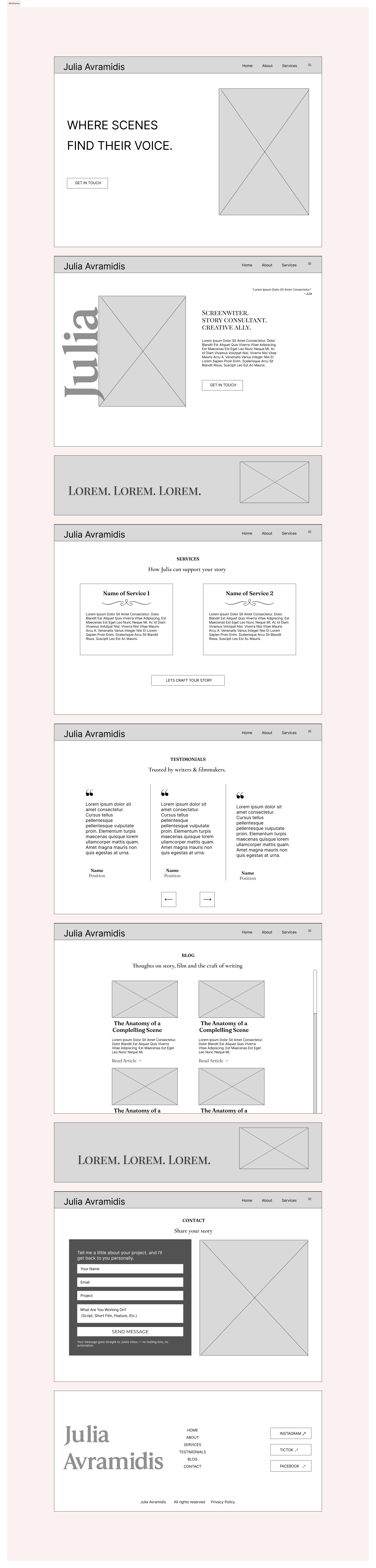
Wireframes validated hierarchy, editorial pacing, and CTA placement early — reducing visual rework and keeping the experience calm and readable across devices.

Key UX decisions

  • Minimal navigation to reduce cognitive load
  • Editorial spacing to support calm reading
  • Clear, non-pressuring contact path
  • Mobile-first structure from the start
Low-fidelity wireframes validating layout and hierarchy
Wireframes validating content hierarchy and CTA clarity.

UI Design in Figma

Once the UX structure was approved, the project moved into high-fidelity UI design. The visual system focused on editorial typography, clear hierarchy, and restrained accents to support a cinematic tone without sacrificing readability.

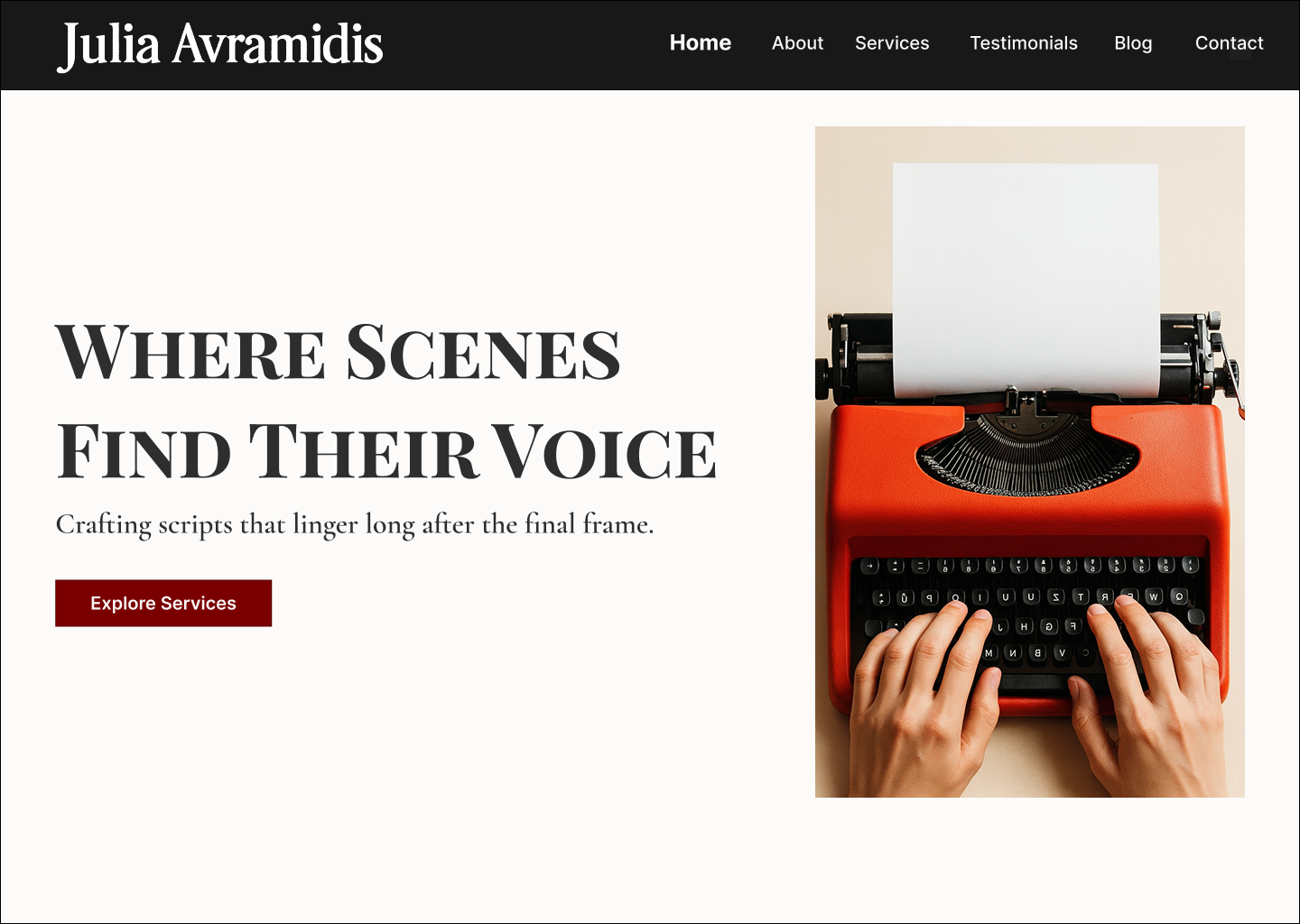
Final homepage UI showing cinematic hero and primary CTA
Final homepage — cinematic positioning and primary call-to-action.
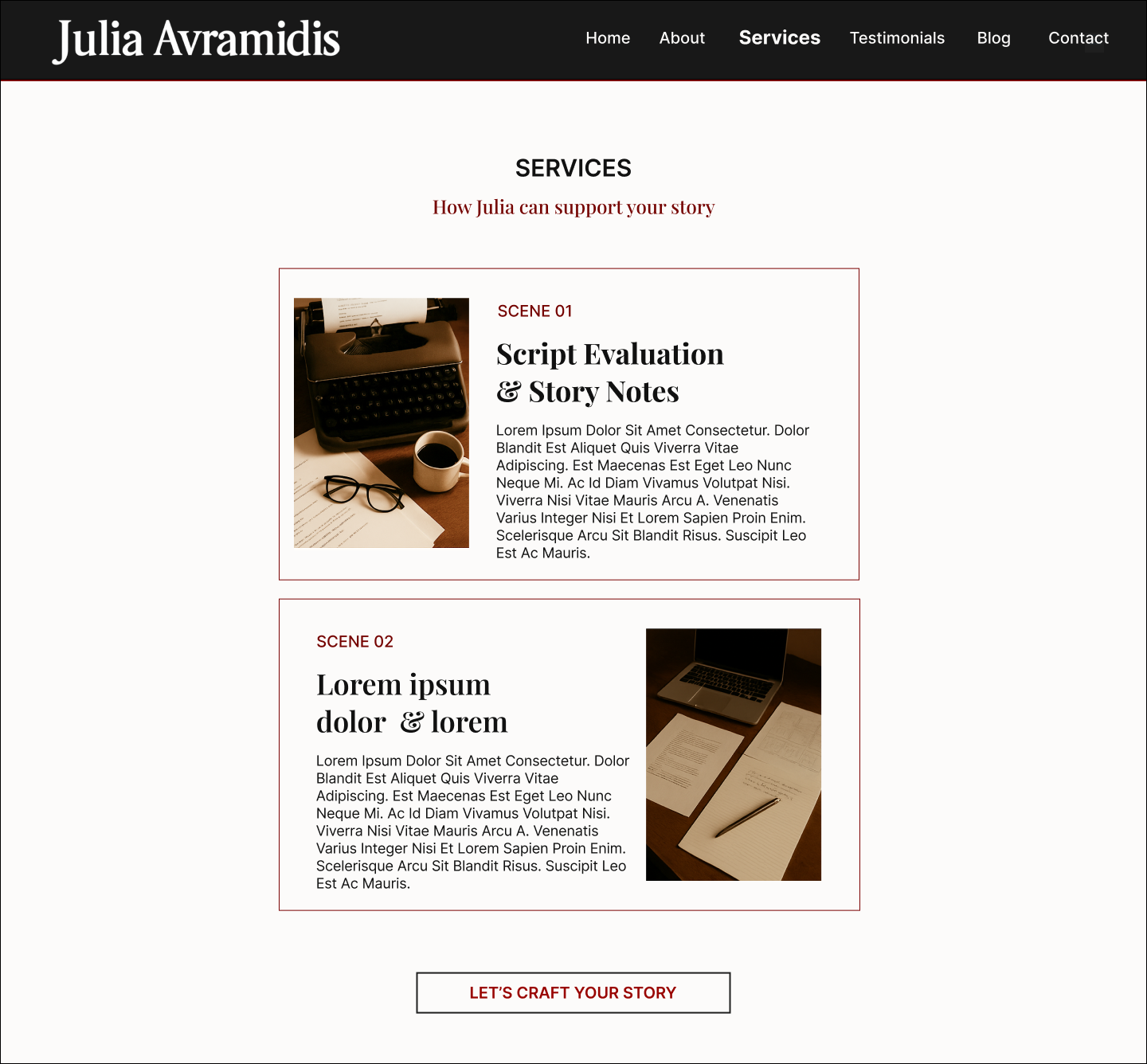
Services page with two clearly defined offerings
Services — clear offerings, editorial rhythm, minimal friction.

Development & CMS

The website was built as a custom WordPress theme (no page builders), with content structured using ACF to keep editing safe and predictable.

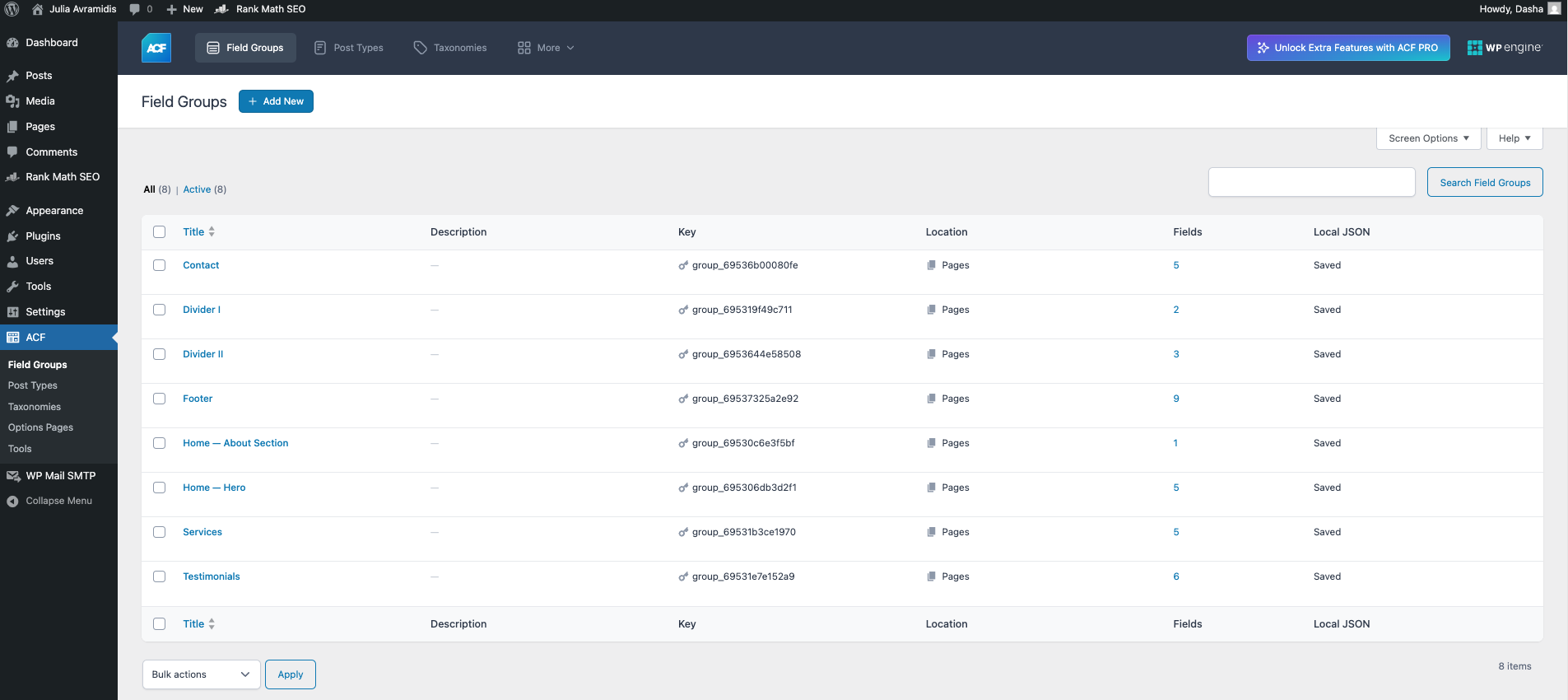
Field groups were designed around real content needs (hero, about, services, testimonials, dividers, contact, footer), allowing the client to update text and images without breaking layout consistency.

Implementation notes

  • Custom theme architecture for consistent typography and spacing
  • ACF-driven sections for client-safe editing
  • Deployment on SiteGround for reliability and WordPress-friendly performance tooling
  • Reliable email delivery configured using WP Mail SMTP
ACF field groups in WordPress CMS
Custom CMS structure using ACF — designed for non-technical editing.

SEO & Results

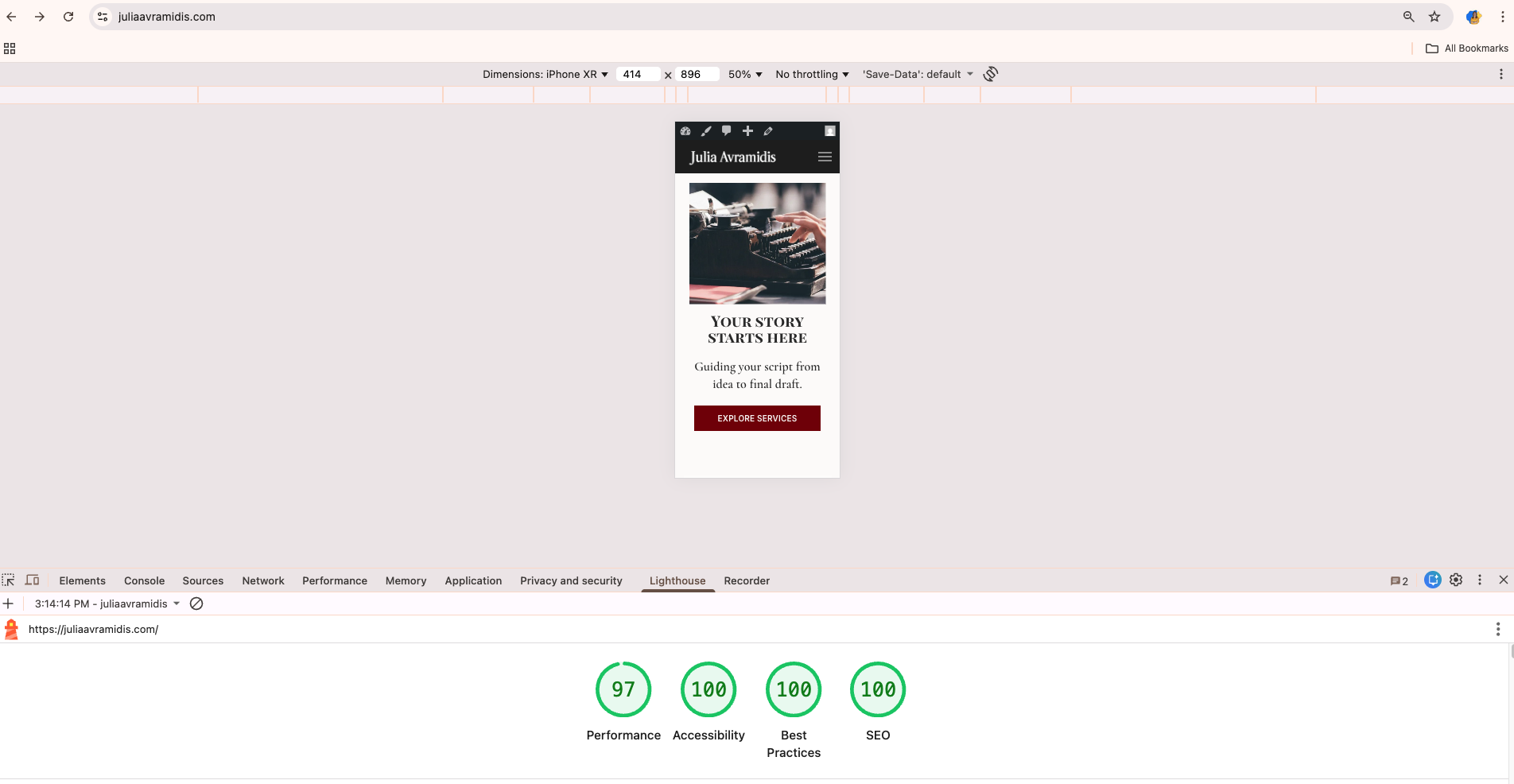
The website launched with a strong technical foundation: clean semantic markup, controlled meta data, mobile-first structure, and performance-conscious implementation.

Lighthouse audit showing high performance, accessibility, best practices, and SEO scores
Lighthouse validation — performance, accessibility, best practices, and SEO.

Outcome

  • Production-ready, fully launched website
  • Clear positioning and low-friction user journey
  • Editorial, cinematic visual language aligned to the brand
  • Scalable CMS that supports client independence
  • SEO validation and strong technical scores after launch